
Jens Kesenheimer
Managing director
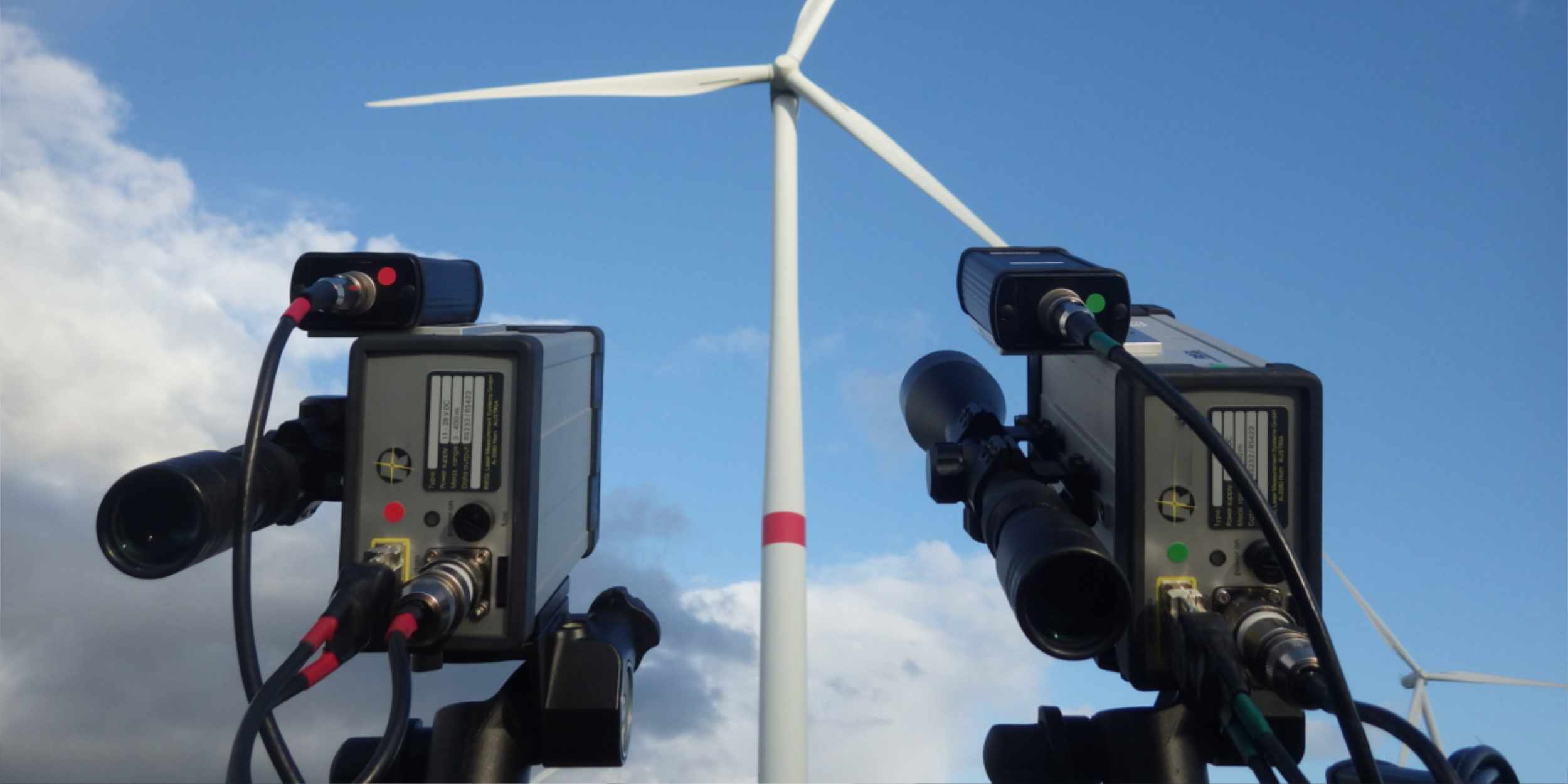
When a wind turbine isn't running smoothly, it's often due to something barely visible from the outside: The three rotor blades are not precisely at the same angle. Even small deviations of less than one degree are enough to generate increased vibrations and loads for the entire system—rotor, drivetrain, nacelle, tower, and foundation—and to stress the turbine long-term.
The permissible limit according to the [1] GL guideline is 0.60°.
In the [2] white paper "Balancing of Wind Turbine Rotors" from 10/2019 (published by BWE e.V.), statistical evaluations of rotor blade angle measurements on wind turbines were published, revealing that a majority of the turbines have rotor blade angles deviating by more than 0.6°.
The good news: The problem can be measured, corrected, and documented. A current project by demonstrates how this looks in practice. 8.2 Kesenheimer & Loos.
The rotor blade angle measurement using a laser measurement system on a 4 MW turbine yielded the following values:
And thus a difference of 0.62°, which is above the permissible limit of 0.6°.
In close coordination with the on-site service team, the rotor blade angles were subsequently corrected. A validation measurement confirmed the successful adjustment:
The difference was now well within the permissible range. The newly adjusted angles were then marked and documented.
Jens Kesenheimer adds: “We recommend measuring the rotor blade angles after commissioning the turbine and correcting them if there is a relative deviation greater than 0.3° to avoid increased stress on the entire system from the outset.”
Result: Vibrations throughout the entire system were noticeably reduced. The total effort for measurement, correction, and validation was approximately four hours.

Find out how we can help you find and implement sustainable energy solutions.